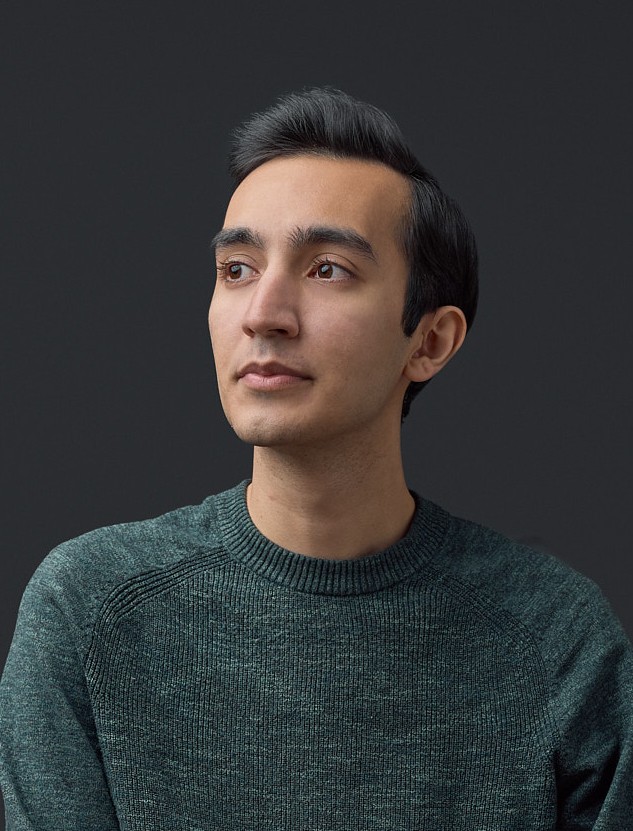
A Letter from Cannes 2026
Eleven days at the 79th Festival de Cannes, written between the screenings
Photos: Parham Nikseresht
Cannes is many things. A film festival. A market. A red carpet. A place that takes ten months to plan for and 11 days to recover from. What follows is a record of those days.
Landing
You land in Nice, take a train along the coast, and within an hour you are standing in Cannes with a lanyard in your hand and the rest of the year feels far away.
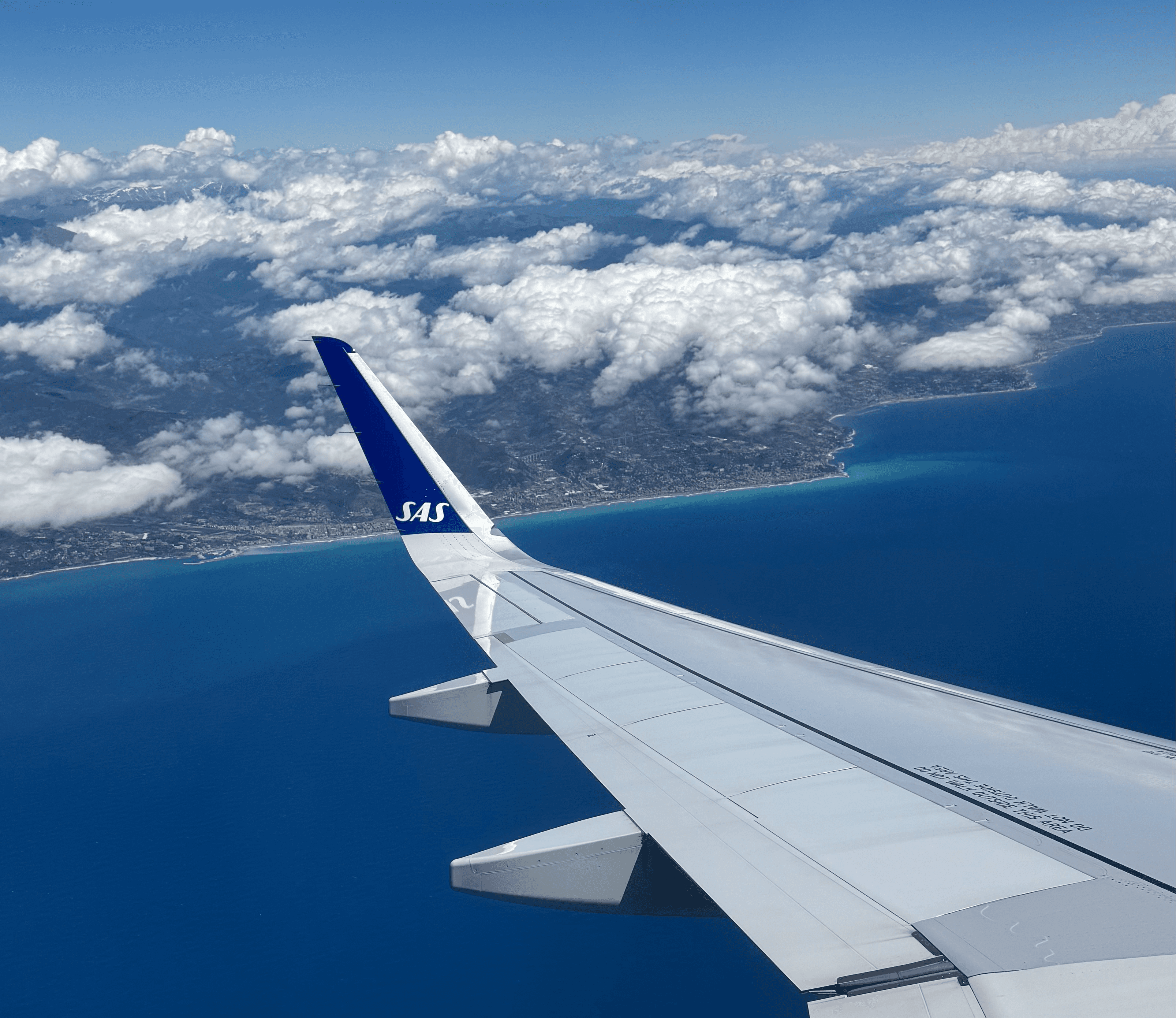
This was my third time at Cannes, but the first time arriving from Norway, and the first time going as part of nordic—filmmakers. Both things changed how the week felt.
I had heard the same things about Cannes that everyone else has heard. That it is overwhelming. That it is expensive. That nobody really knows what they are doing the first time. All of that is true. What people do not tell you is that it also becomes familiar very quickly. The Palais sits at the centre. Everything else happens around it.
The Palais
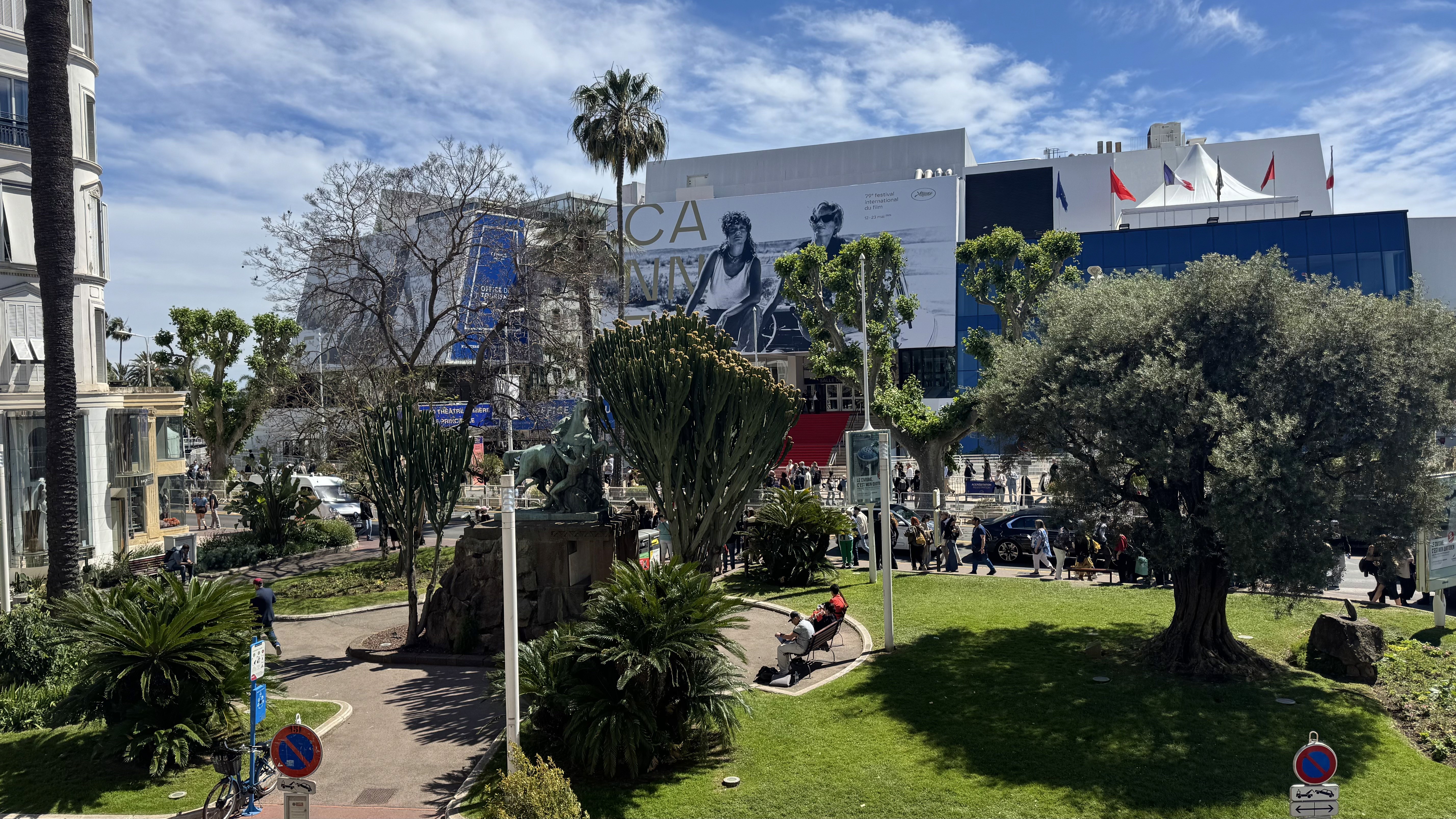
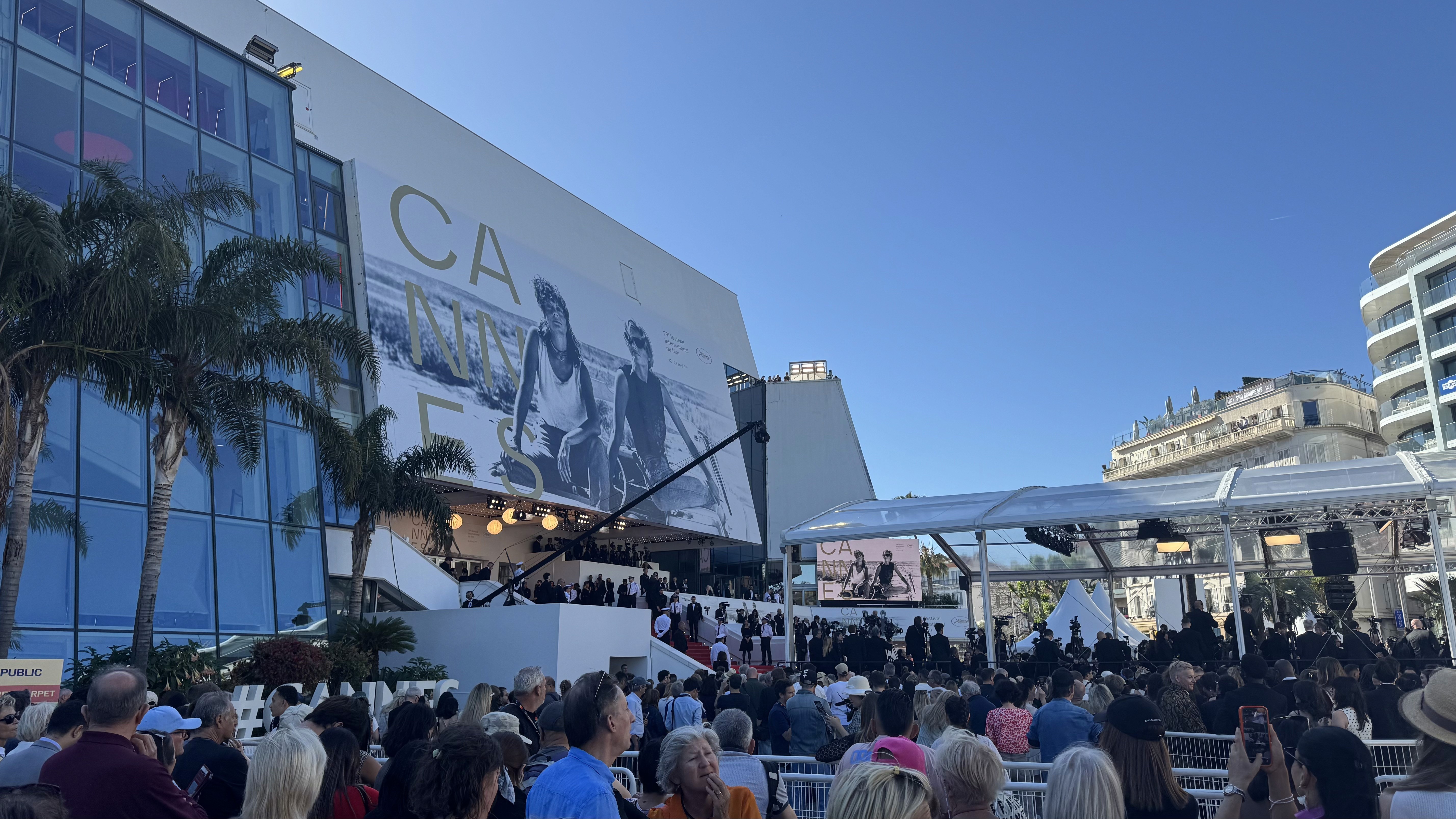
The poster goes up on the side of the Palais and is visible from half the city. You see it from the train station, you see it from the gardens, you see it across the Croisette. It is one of those details that tells you the festival is about to begin, even before anyone in a tuxedo has shown up.
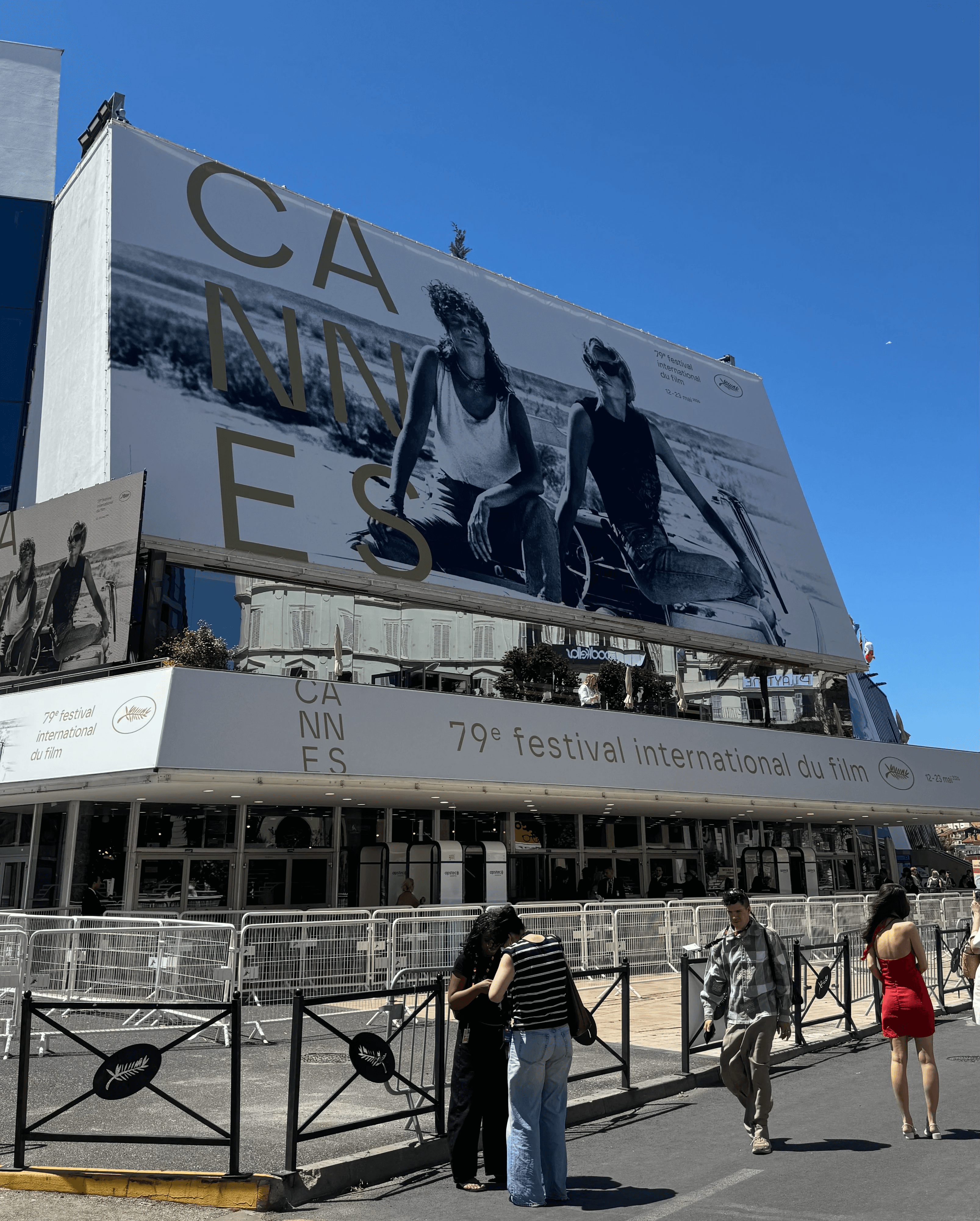
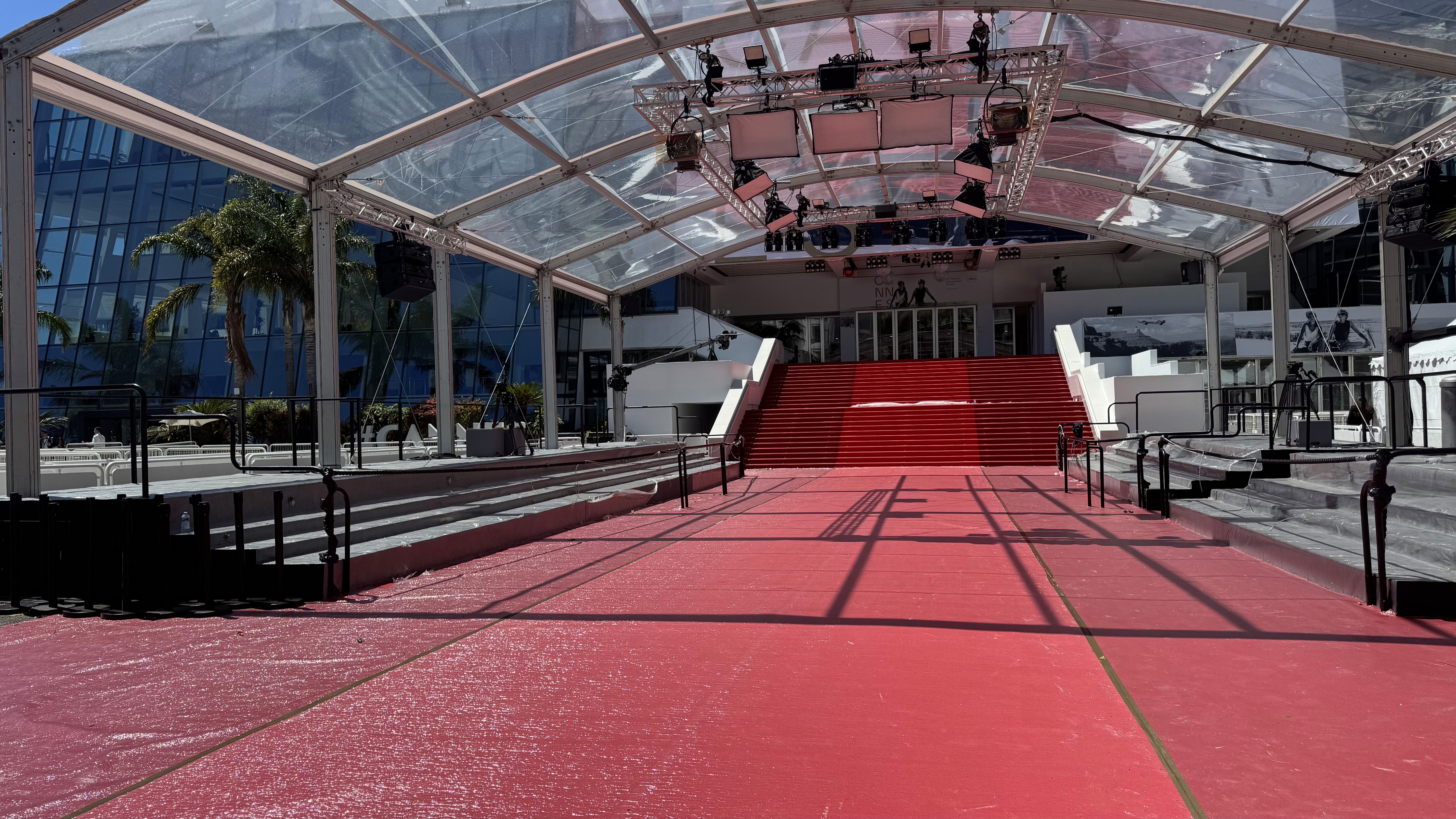
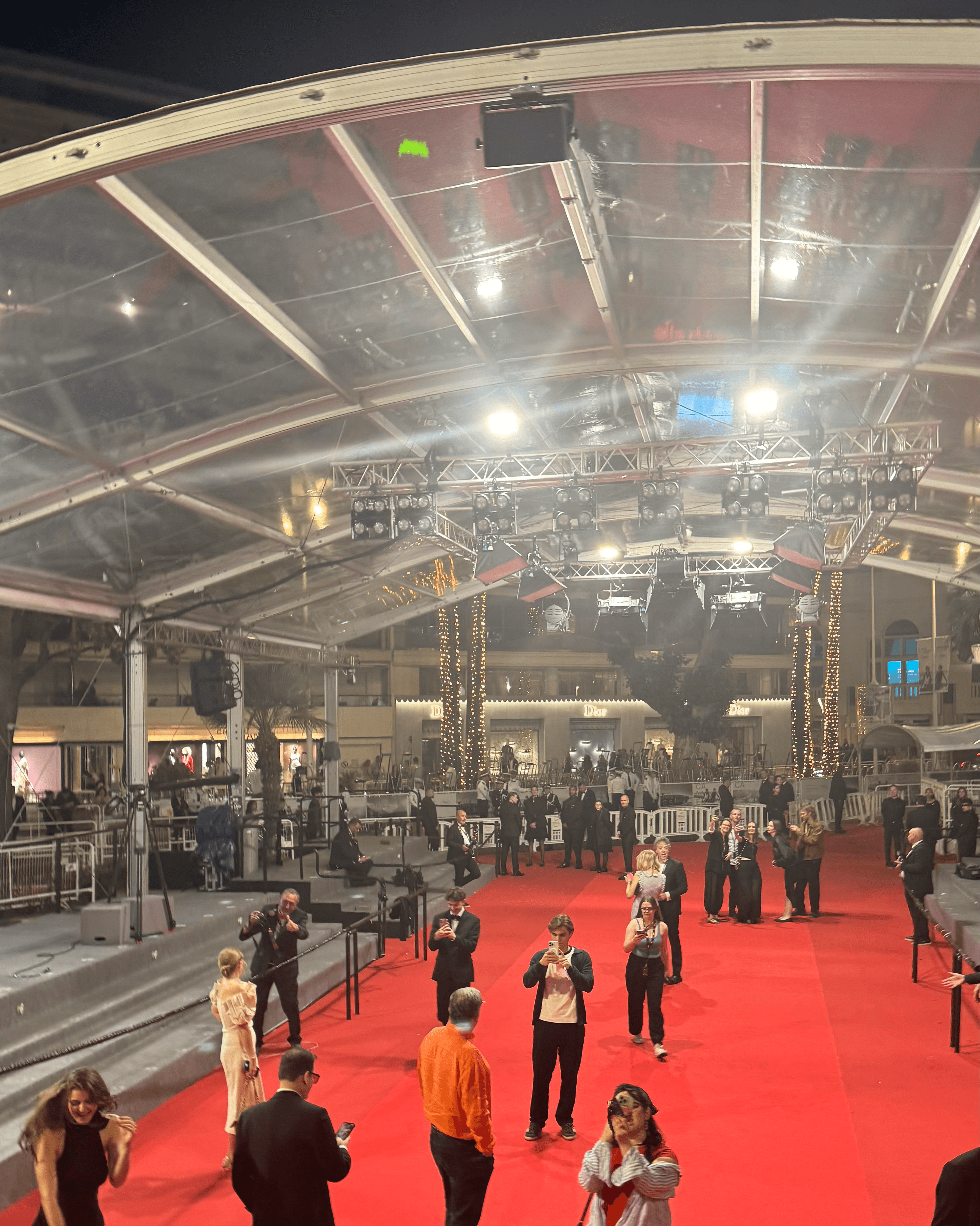
During the day, the red carpet is empty and almost boring. You can walk past the same staircase that will, in a few hours, be lit, photographed, and lined with people in evening dresses. There is something honest about seeing it like this, in flat daylight, before the lights come on.
What Cannes actually is
For anyone reading this who has only seen Cannes through the gala photos, here is the short version. The festival is many festivals stacked on top of each other.
The Competition is the part you see on TV, the Palme d'Or, the jury, the gowns. Around it sit the parallel sections: Un Certain Regard, Directors' Fortnight, Critics' Week, Cannes Premiere. These are where a lot of the most interesting work lives. Running underneath all of it is the Marché du Film, the largest film market in the world, where the buying and selling and financing of cinema actually happens.
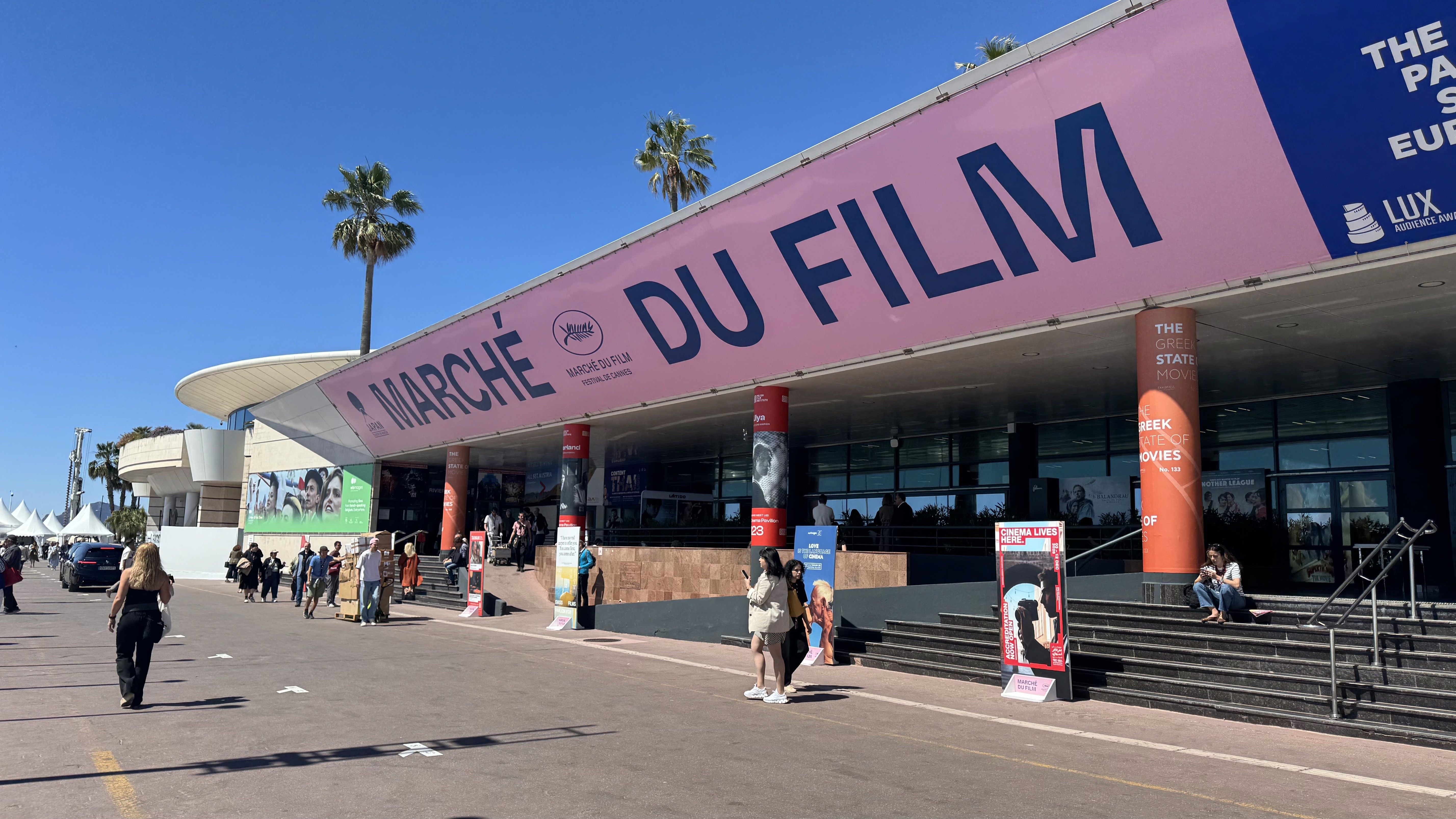
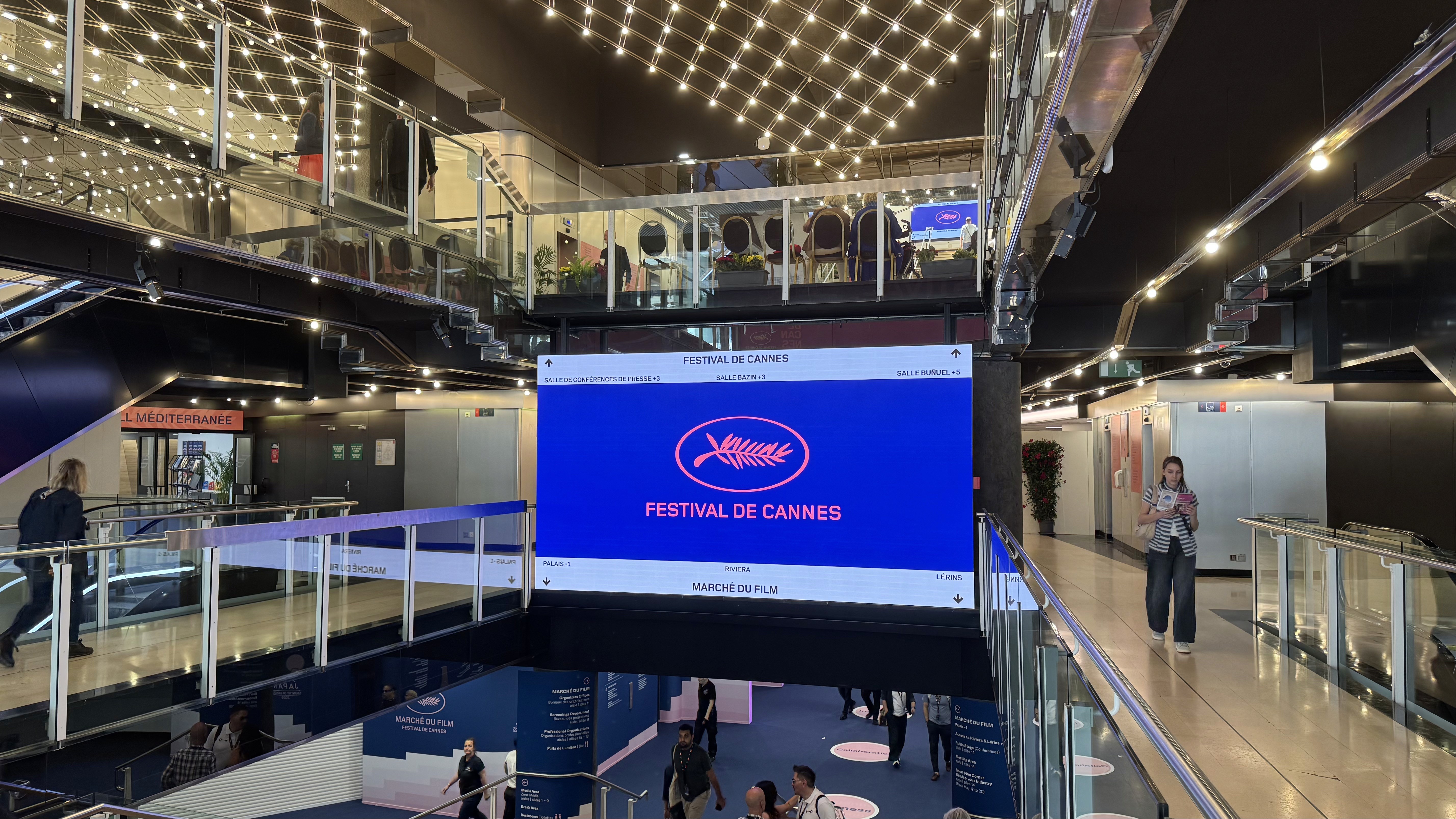
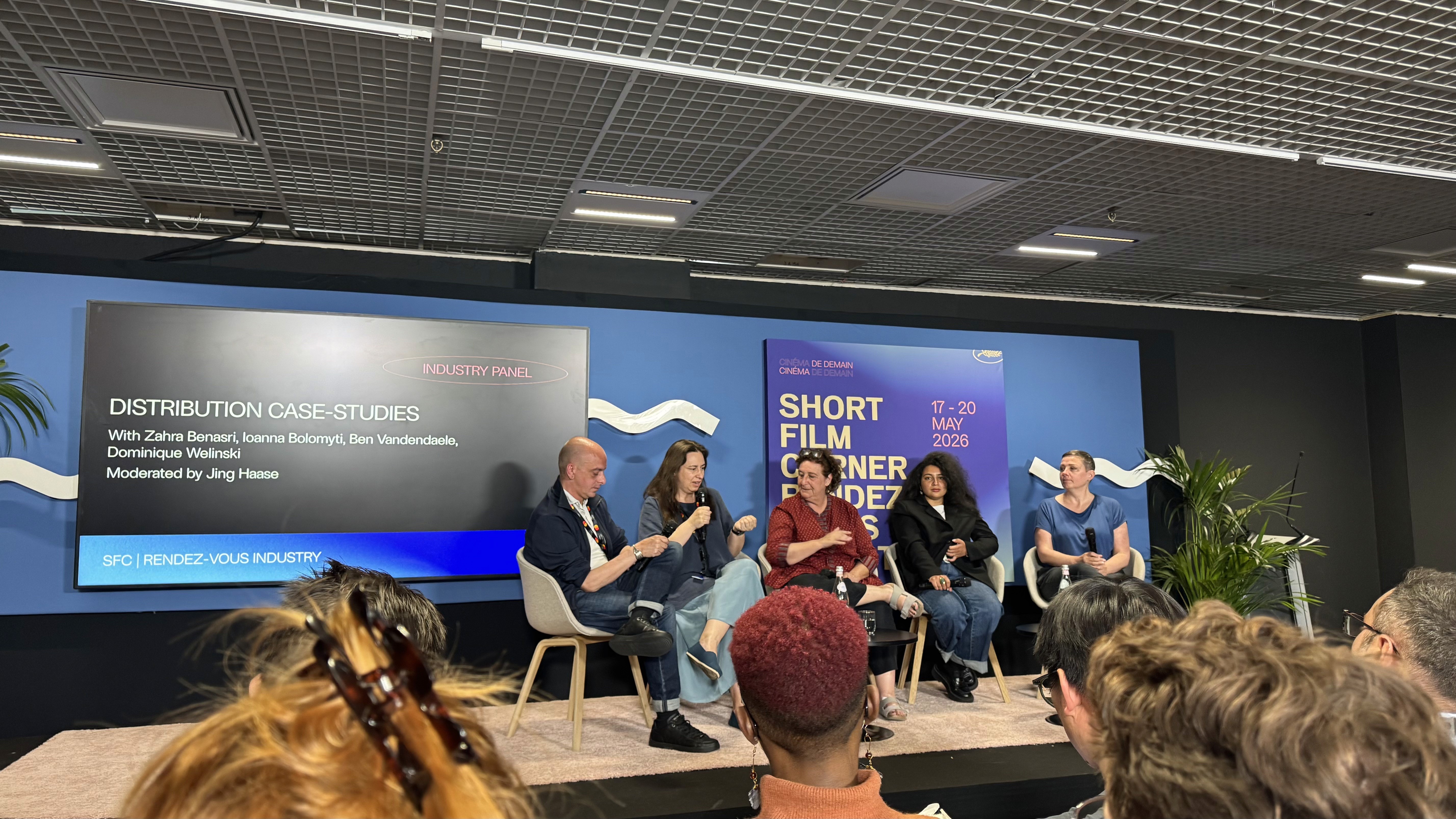
Most countries have a pavilion. Panels run all day. There are case studies on distribution, conversations about co-production, sessions for short film producers trying to figure out their next step. You could spend ten days inside the Palais and never see a single film.
The Nordic House
The Five Nordics is the collaboration between the Danish Film Institute, the Finnish Film Foundation, the Icelandic Film Centre, the Norwegian Film Institute and the Swedish Film Institute. They share a building at 11 Square Mérimée, right opposite the Palais, and during the festival it becomes the Nordic House. You do not need an accreditation to enter, which already tells you something about how the Nordics tend to do things.
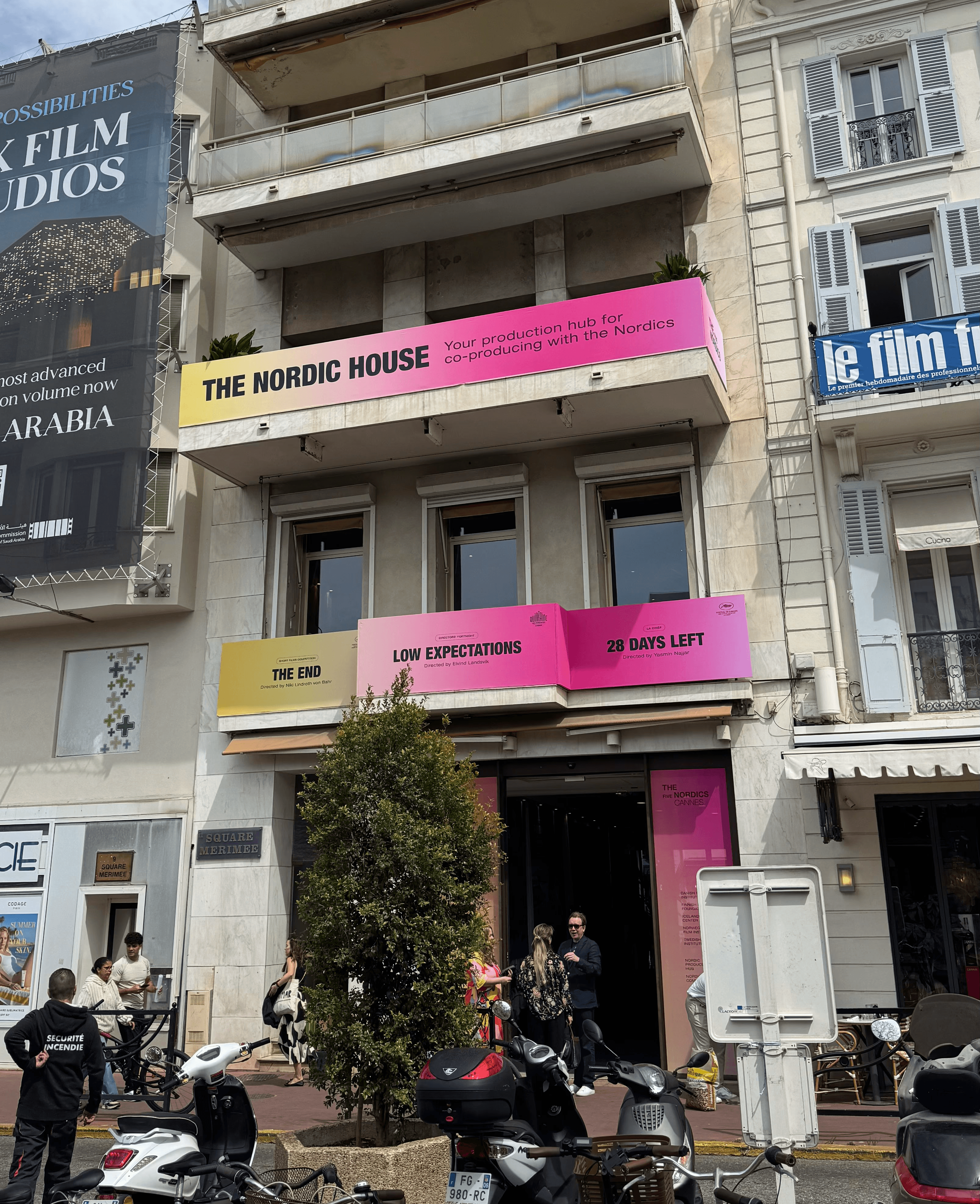
Inside, each country has its own wall of projects. Seeing them all next to each other gives you a fuller picture of what the Nordics are making than you usually get.
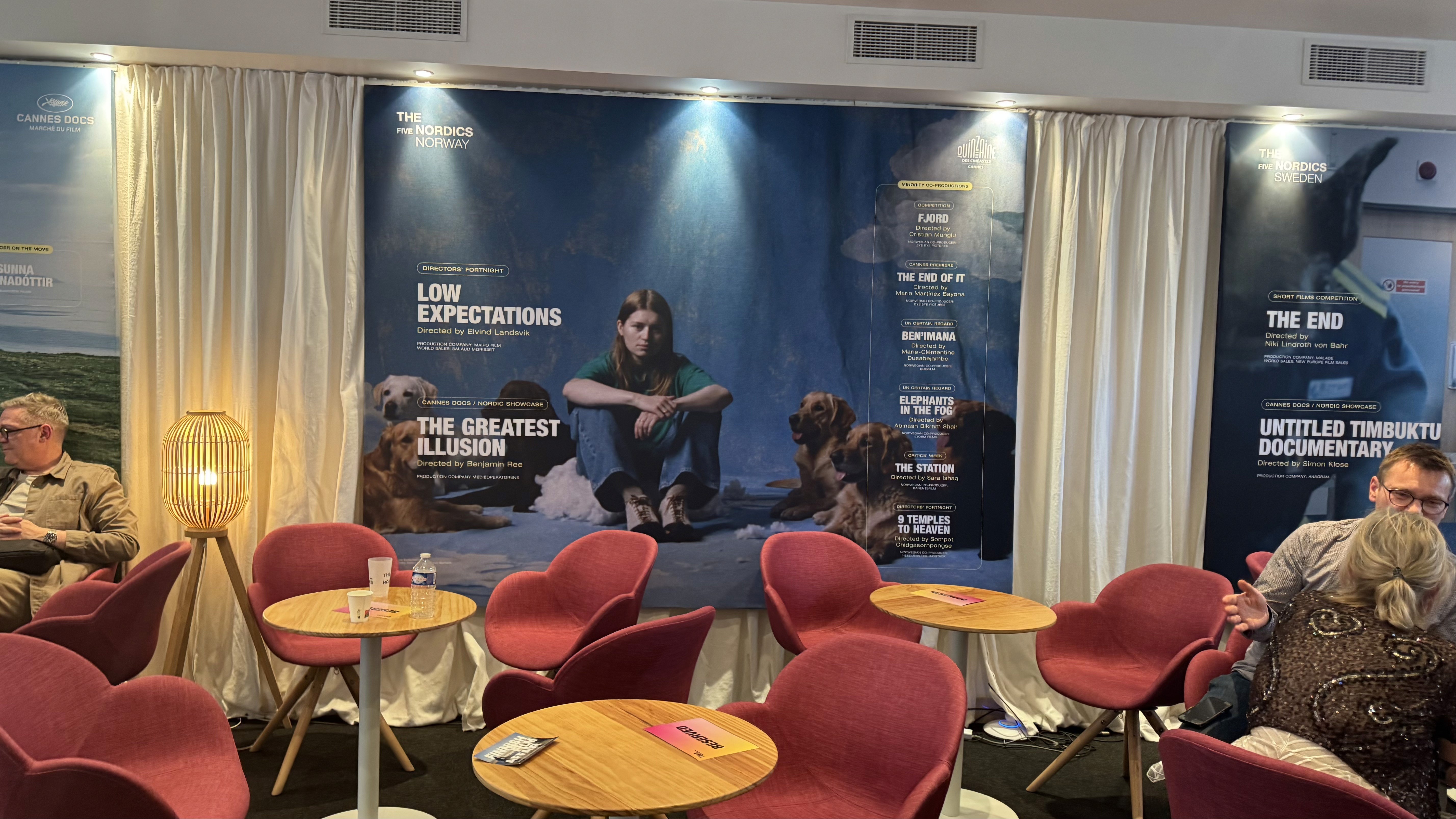
Eivind Landsvik's Low Expectations (Lave forventninger) was premiering in Directors' Fortnight, his debut feature with Marie Ulven Ringheim, better known as girl in red, in the lead role. Benjamin Ree's The Greatest Illusion was showing in the Five Nordics Docs-in-Progress Showcase. Then there were the co-productions. Cristian Mungiu's Fjord in Competition, with Renate Reinsve and Sebastian Stan, co-produced by Eye Eye Pictures in Norway. Maria Martínez Bayona's The End of It in Cannes Premiere, also co-produced by Eye Eye Pictures, with Kristine Kujath Thorp, Pål Sverre Hagen and Noomi Rapace in the cast. Elephants in the Fog by Abinash Bikram Shah and Ben'Imana by Clémentine Dusabejambo, both in Un Certain Regard, both Norwegian co-productions.
For a country the size of Norway, this is a serious presence. Standing in front of the wall, I felt a quiet kind of pride to see Norwegian work standing next to films from all over the world. A few days after I flew home, Fjord won the Palme d'Or, the top prize at Cannes. Small country, long reach.
The Films
In Cannes, you queue. Everyone queues. Even with an accreditation you queue. People who have been coming for twenty years queue. The first time I sat down inside the Grand Théâtre Lumière and the lights went down, I understood, in a way no festival podcast had ever quite explained to me, why people keep coming back.
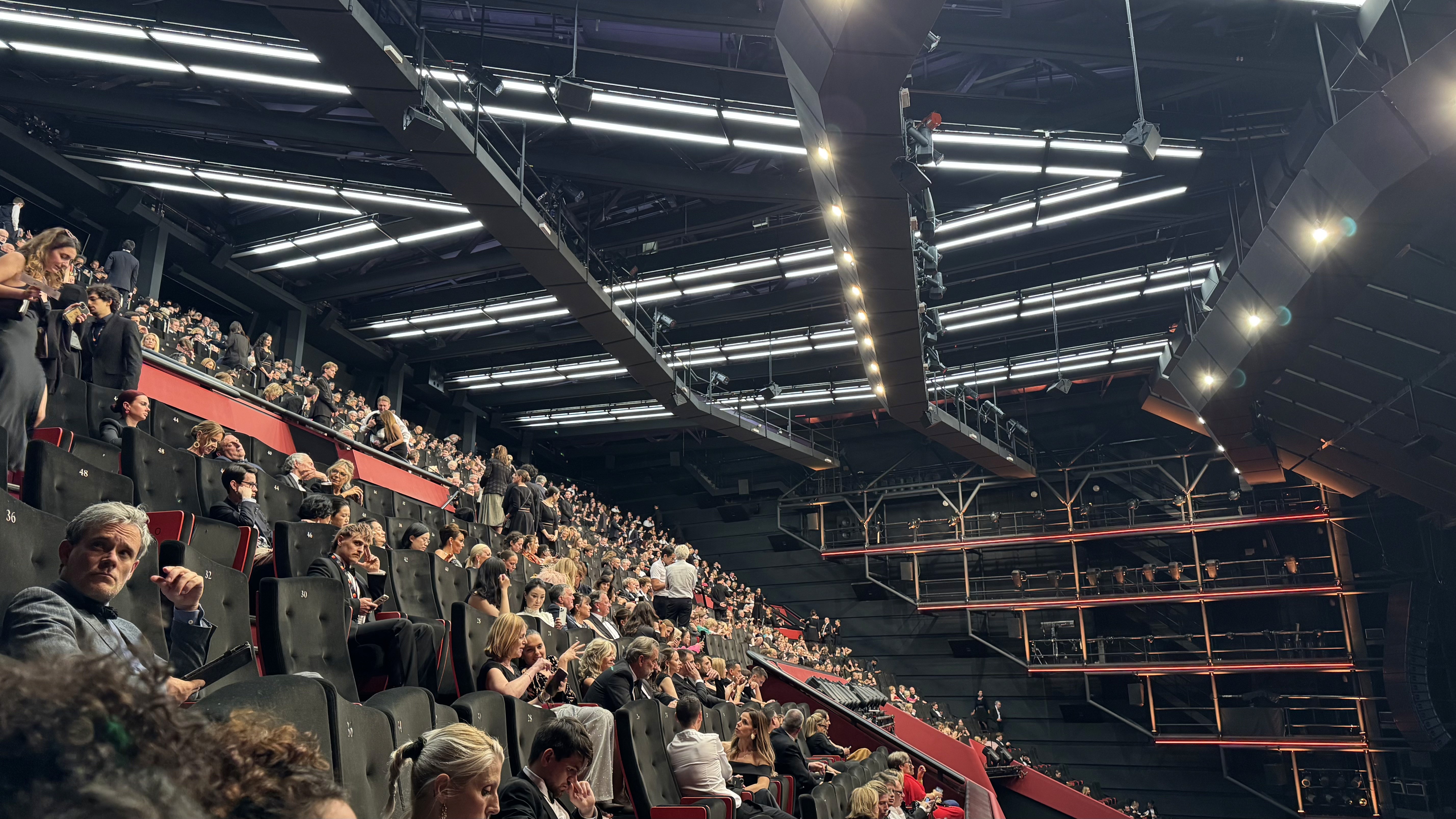
There is the moment when the Cannes logo comes up on the screen, the small palm leaf inside the oval, and the room goes completely quiet. I had seen that logo my whole life on posters and trailers. Seeing it for the first time at full size, in the room it was made for, was the kind of small chill that you do not forget.
The films themselves are varied, as they always are at any festival. Some are great. Some are tiring. Some you walk out of and feel like the entire trip was already worth it.
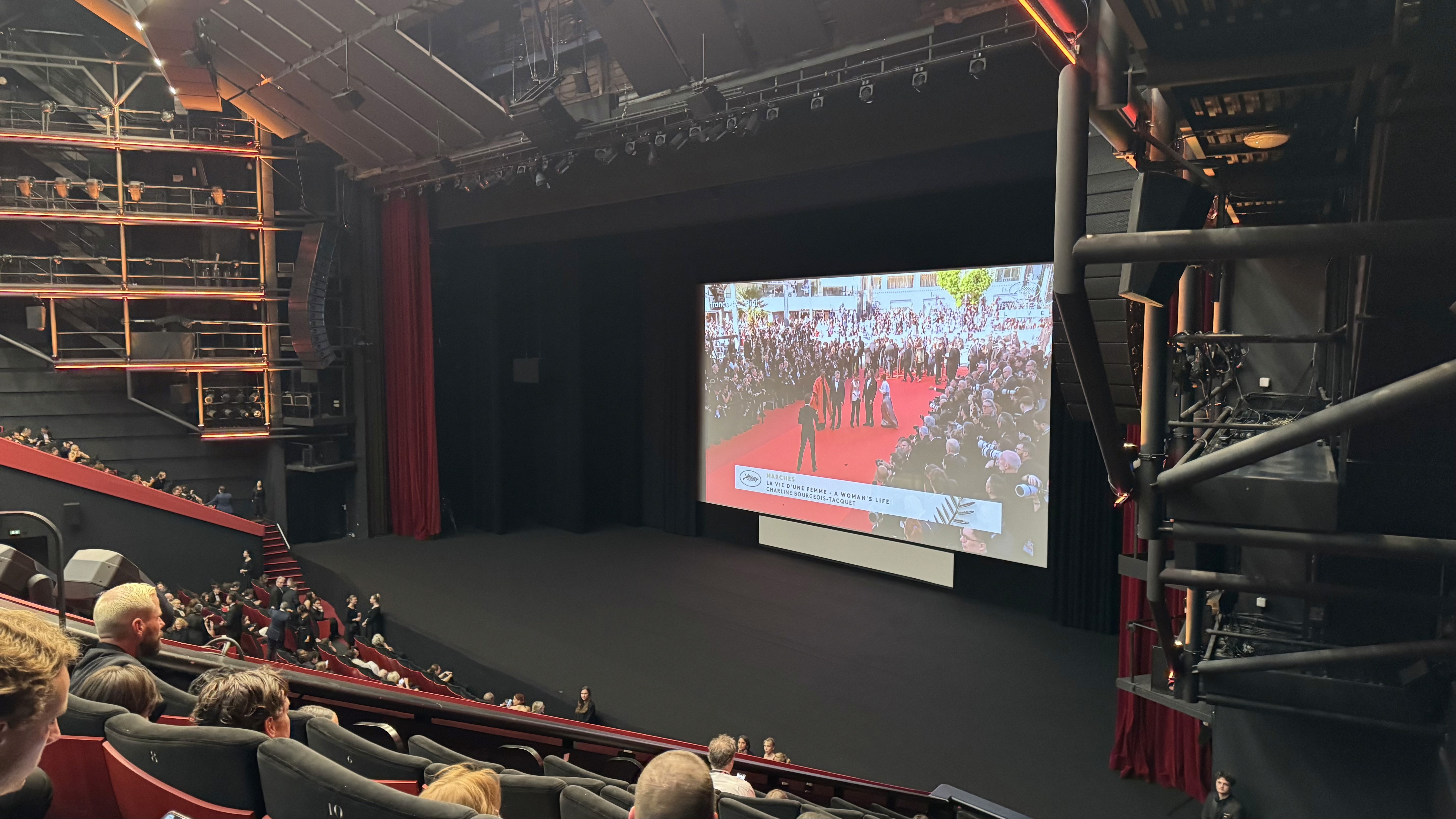
Outside, before each premiere, a crowd gathers. People with cameras, people who just want to be near it, people who come every year hoping to see someone famous step out of a car. It is part of the show.
And then, of course, the carpet at night, which is a kind of theatre of its own.
17. mai on the Riviera
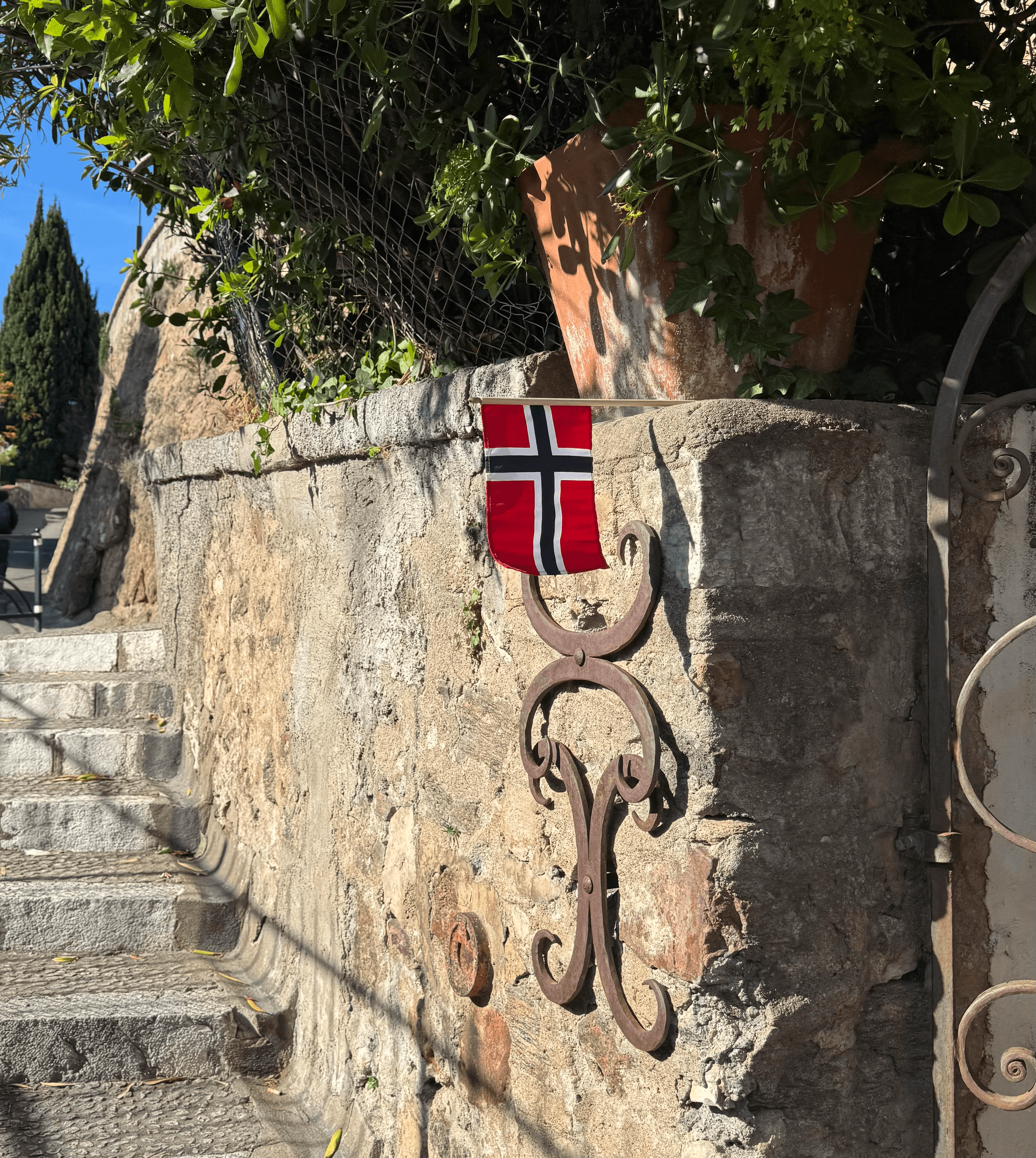
There is something quietly absurd about celebrating Norwegian Constitution Day on the French Riviera. The Norwegian Film Institute hosted a 17. mai breakfast for Norwegians in Cannes. The villa was up the hill in the old town, near the clock tower, and a small Norwegian flag marked the entrance.
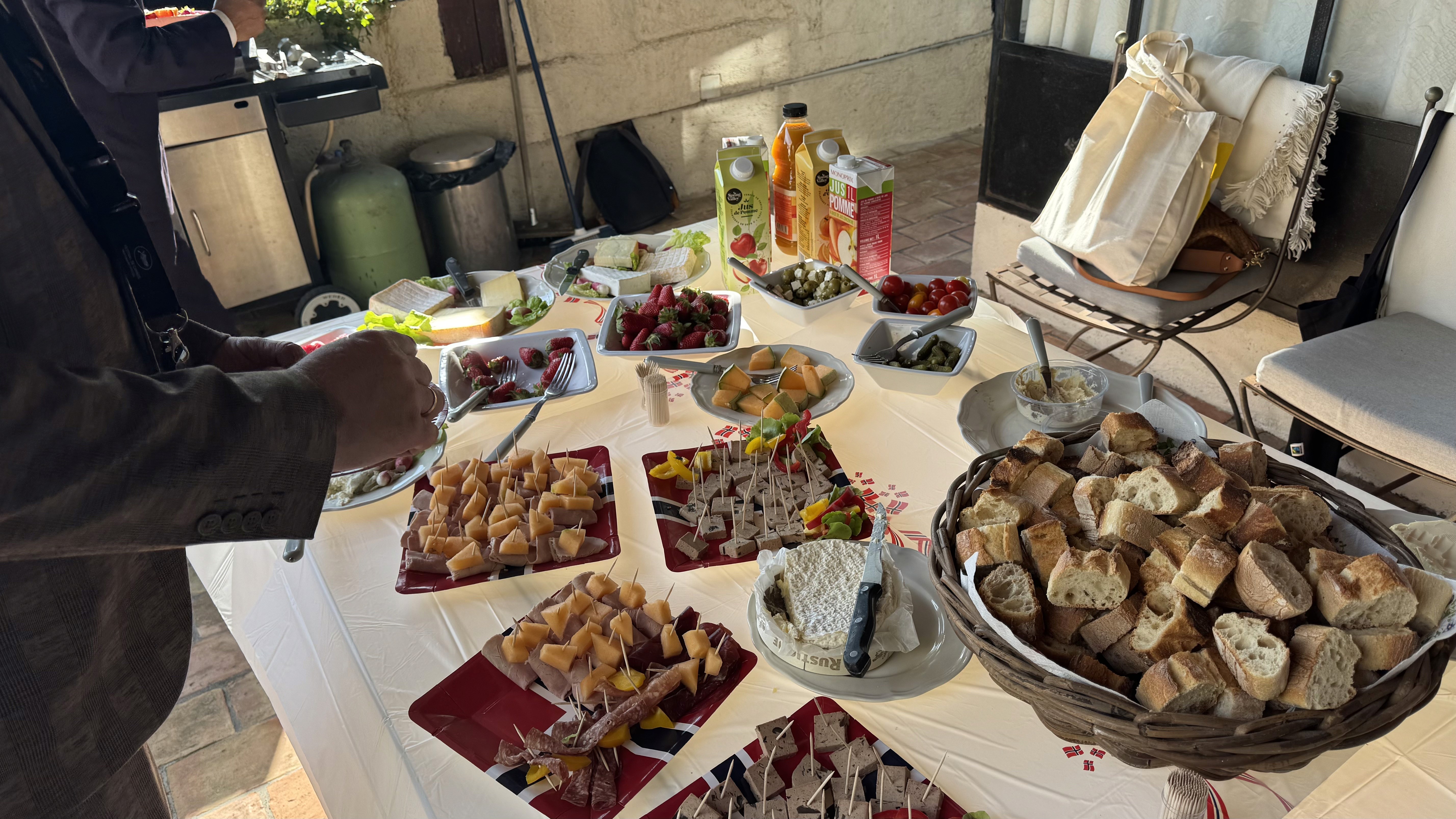
Several days into a festival schedule that does not allow for much sleep, we found ourselves with champagne in hand and small Norwegian flags on toothpicks scattered across the buffet.
And the view from the rooftop was something else.
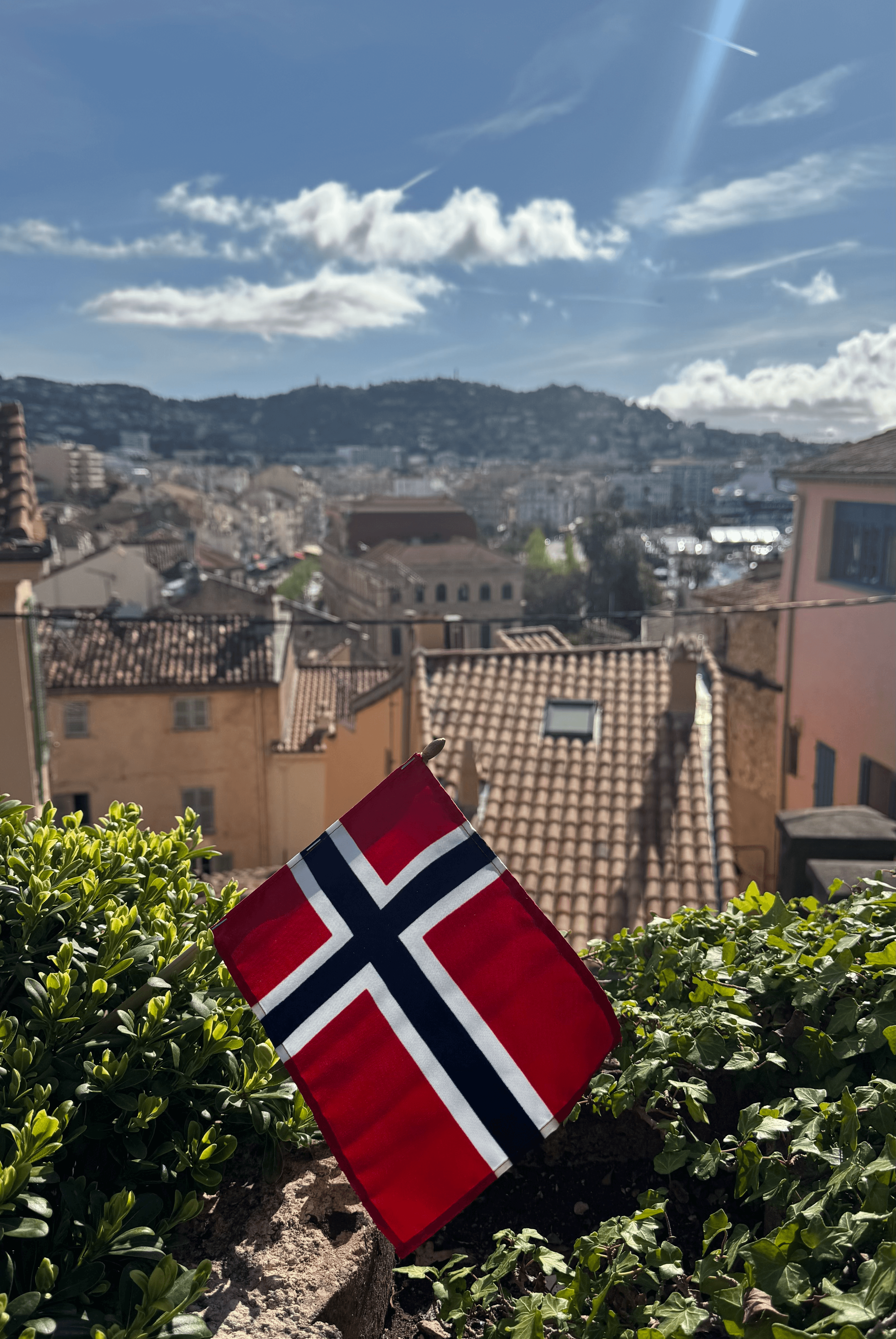
I have lived in Norway long enough by now to have my own habits for the day. Finding a similar feeling of belonging in France was the surprise. It was the first day of the festival where I was not thinking about which screening was where, or which producer I was supposed to find. It was just, briefly, a national holiday in the south of France, with people I half knew and people I had never met, all of us speaking the same language for a couple of hours in the middle of a festival that mostly does not.
The meetup at La Pizza CreSci
We had been doing pre-Cannes meetups in Oslo for months. The idea was simple. Cannes is intimidating to navigate alone, especially the first time. So we gathered all the Nordic filmmakers going to Cannes, before the trip, just to put faces to names and trade plans. It worked. People wrote afterwards saying it had made the festival feel less lonely.
So once we were actually in Cannes, it made sense to keep going.
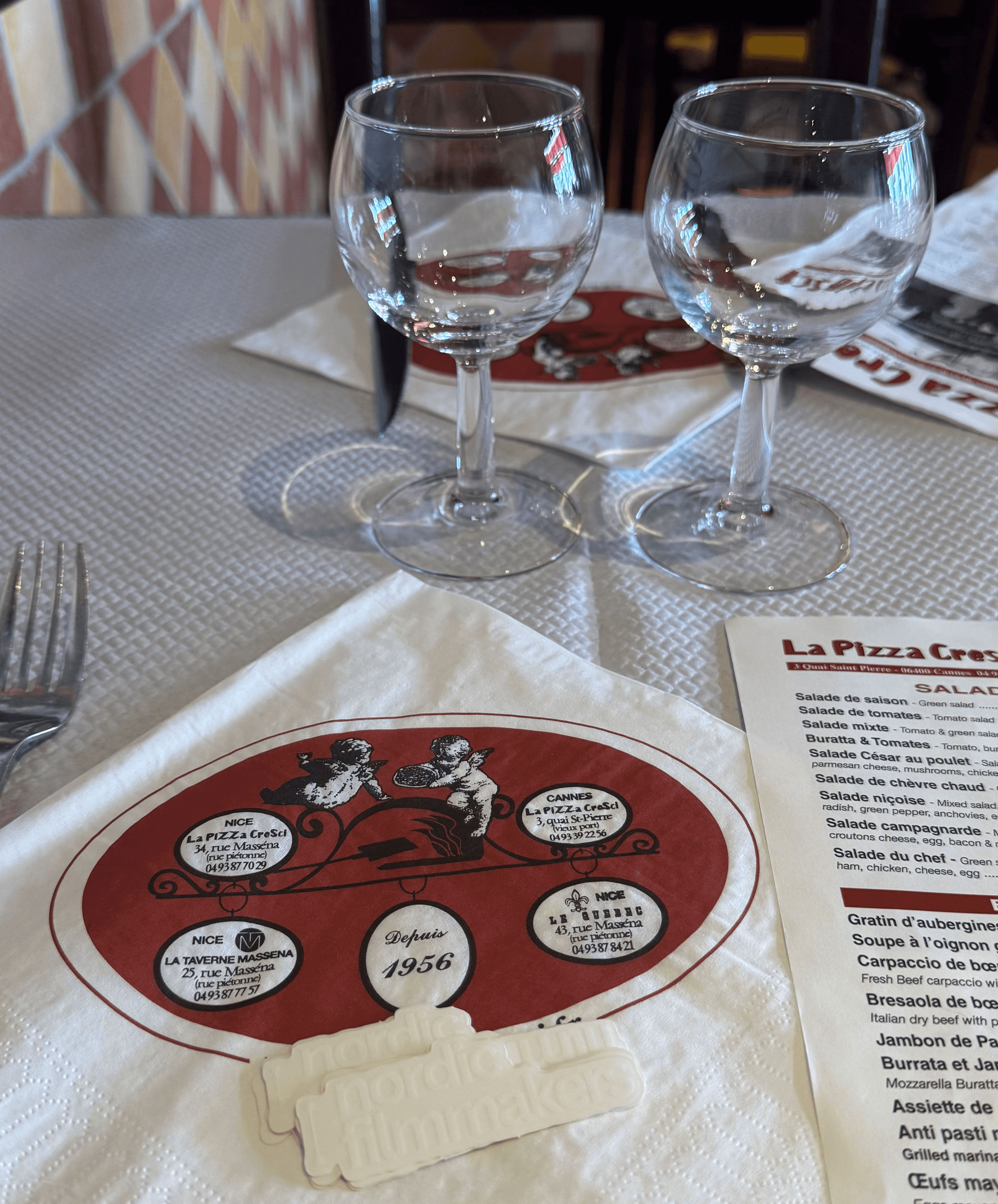
Halfdan Hallseth and Nikoline Bangen, both part of the nordic—filmmakers team, helped me put the lunch together. We picked La Pizza CreSci, an old pizzeria on Quai Saint-Pierre that has been there since 1956 and feels, comfortingly, like it has not changed since. We put nordic—filmmakers stickers on the table and let people drift in.
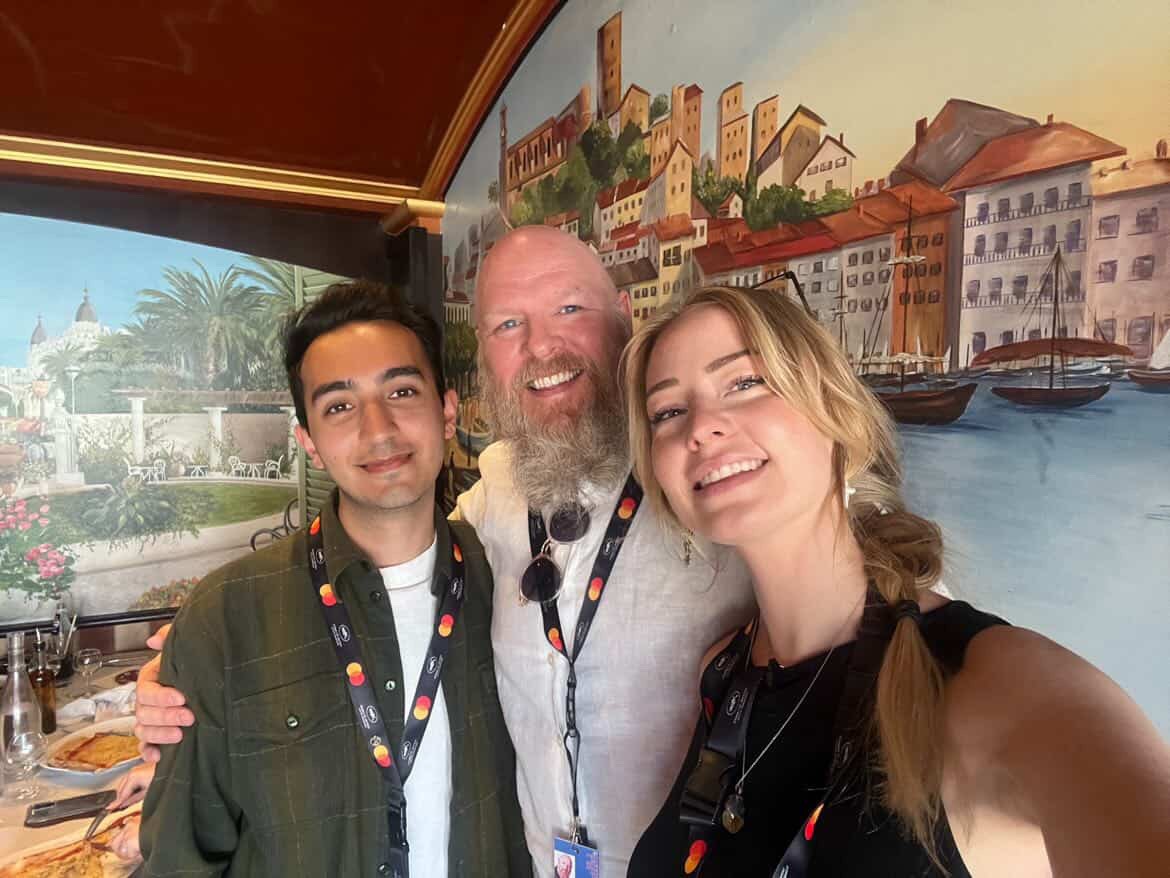
What surprised me was how many people came. Filmmakers from across the Nordics, but also people from much further away who had heard about nordic—filmmakers online and wanted to say hello in person. There is something specific about Cannes that makes this work. Everyone is far from home. Everyone is open in a way they often are not back home.
This is the thing about Cannes that nobody really writes about, and probably the thing I will remember longest. The films will be reviewed. The deals will be made. The red carpet will be photographed from forty angles. But the lunch where people who had only ever talked on a screen were suddenly sitting next to each other and laughing, that part does not make the news, and it is probably the most useful thing that happens in the entire week. Cannes is one of the few places where everyone wants to connect, and where the people sitting across from you are in roughly the same situation you are, just from somewhere else.
This is the thing about Cannes that nobody really writes about.
Going home
The flight back is quieter than the flight down. I have not slept properly in 11 days. My accreditation is still around my neck because I have forgotten to take it off. I think about what I saw, who I met, what I want to do differently when I come back.
Cannes is many things. It is the industry's largest theatre. It is also, if you let it, a place where what we have been building at nordic—filmmakers, back in Norway, can have a kind of second home for 11 days a year. That, more than anything else, is what I will be taking back with me.
See you next year.